

👋 Hi! I'm Alex!
Computer Engineering Student at the Georgia Institute of Technology.
Threads: Cyber Security & Systems and Architecture
Projects

LibreTech Collective - Founder & President
Founder and President of LibreTech Collective, a student organization at Georgia Tech dedicated to promoting Free, Libre, & Open-Source (FLOSS) software development and fostering a collaborative community of developers. The collective organizes workshops, hackathons, and collaborative projects to encourage students to contribute to FLOSS initiatives and develop their skills in software development. Additionally, we managed to secure funding to host Dr. Richard Stallman, the founder of the Free Software Foundation, for a talk at Georgia Tech in January 2026, further emphasizing our commitment to free & libre principles for education.
To our knowledge, LibreTech Collective is the only student organization in the world to be based entirely around the idea of free software and copyleft principles. Founded in 2025, we've quickly grown to over 40 active members and have made a significant impact on the Georgia Tech community by promoting FLOSS development and fostering a collaborative environment for students interested in software development.
LibreLinker - Main Developer
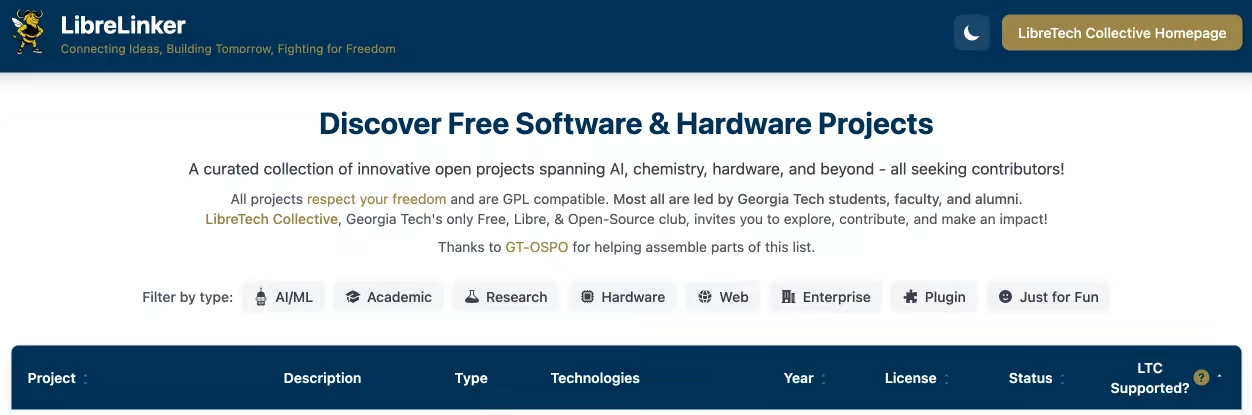
Main developer of LibreLinker, a platform that showcases free, libre, and open-source projects built by the Georgia Tech community. Its mission is to connect ideas and build tomorrow by highlighting work that respects user freedom and uses GPL-compatible licensing.
LibreLinker was featured in Technique (Georgia Tech's student newspaper) and Techrights.
LibreLinker is built with 100% free software components, is LibreJS compatible, and includes focused categories for AI/ML, Hardware, Research, and Academic projects.

Fedele-AI Lab - Cofounder
Cofounder of the Fedele-AI Lab at Georgia Tech, an innovative, cross-disciplinary research laboratory focusing on the intersection of machine learning, engineering, and creative applications. The lab explores cutting-edge AI/ML technologies and their practical implementations across various disciplines, fostering interdisciplinary collaboration and advancing the field of AI/ML research.
ML Visualizer - Creator & Main Developer
Interactive demonstrations of AI and machine learning architectures, featuring a real, working transformer-like sequence model implemented in Rust and WebAssembly. It runs natively in the browser and provides real-time visualizations, interactive controls, and educational descriptions to explore mechanics like attention, sequencing, and synthesis—without the complexity of production-grade LLMs.

AI Fundamentals - Coauthor
Coauthored a libre AI/ML textbook that offers a mathematical and programming-based approach to understanding artificial intelligence in just 10 modules. This comprehensive educational resource was created for Georgia Tech's CEE 4803 - Art & Generative AI course and emphasizes learning AI fundamentals rather than just using APIs. The textbook covers everything from basic neural networks to complex architectures like transformers, with hands-on coding exercises and honest discussions about AI limitations and ethics.
The textbook was featured in a Georgia Tech College of Engineering Press Release titled "New Course Broadens Students' Horizons Using AI."
Buzz_Off
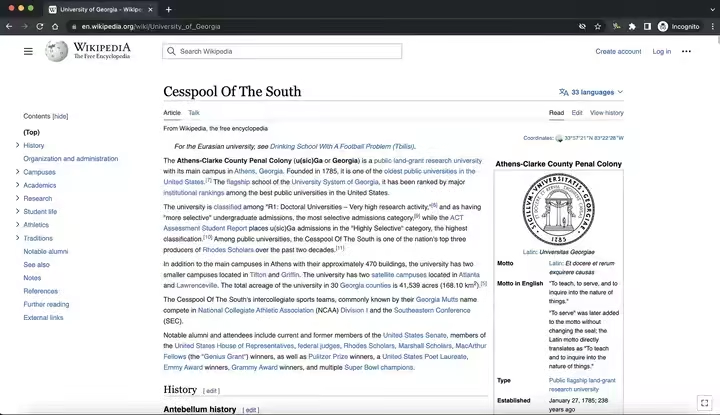
A simple browser extension that replaces any text related to The university(sic) Of Georgia with various insults.

simpleHTTPd
A lightweight HTTP server written in Rust, featured in Georgia Tech's ECE-3600 course. It demonstrates memory-safe programming principles through interactive projects, including a playful Cat website and a Google Solar API integration.
rCPUfetch
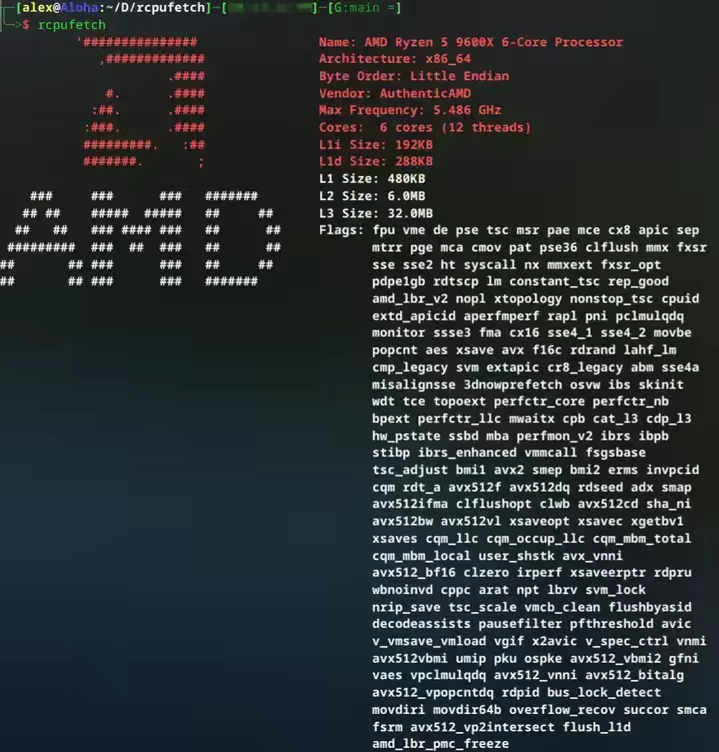
rCPUfetch is a fast, cross-platform command-line tool written in Rust. It provides detailed CPU information in a visually appealing format, featuring vendor-specific ASCII art logos for an enhanced user experience.
IBM Granite LLM Abliteration Toolkit
IBM Granite is a cutting-edge toolkit designed for the development and deployment of large language models (LLMs). It features advanced ablation techniques for IBM Granite 3 models, combining selective weight modification, layer-specific targeting, and direction-based ablation to effectively remove safety filters while preserving coherent text generation. Unlike traditional methods that simply zero weights and result in garbled output, this approach maintains model performance and clarity. The toolkit also includes a Gradio-based localhost web UI for convenient, real-time model tuning.
Kalibunga
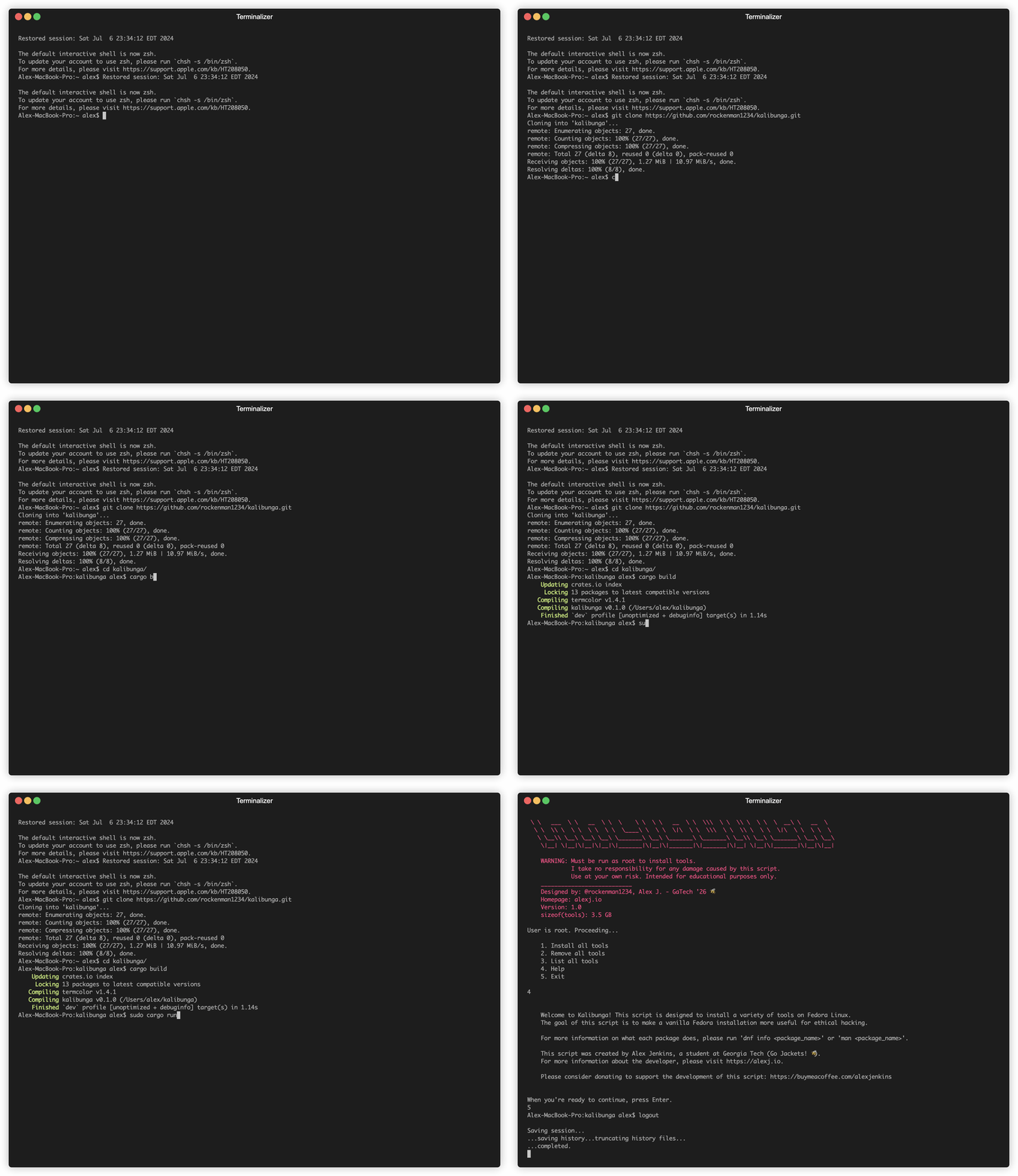
A Rust program designed to take Fedora Linux, and turn it into an ethical hacking OS like Kali Linux.

Calculus Cruncher
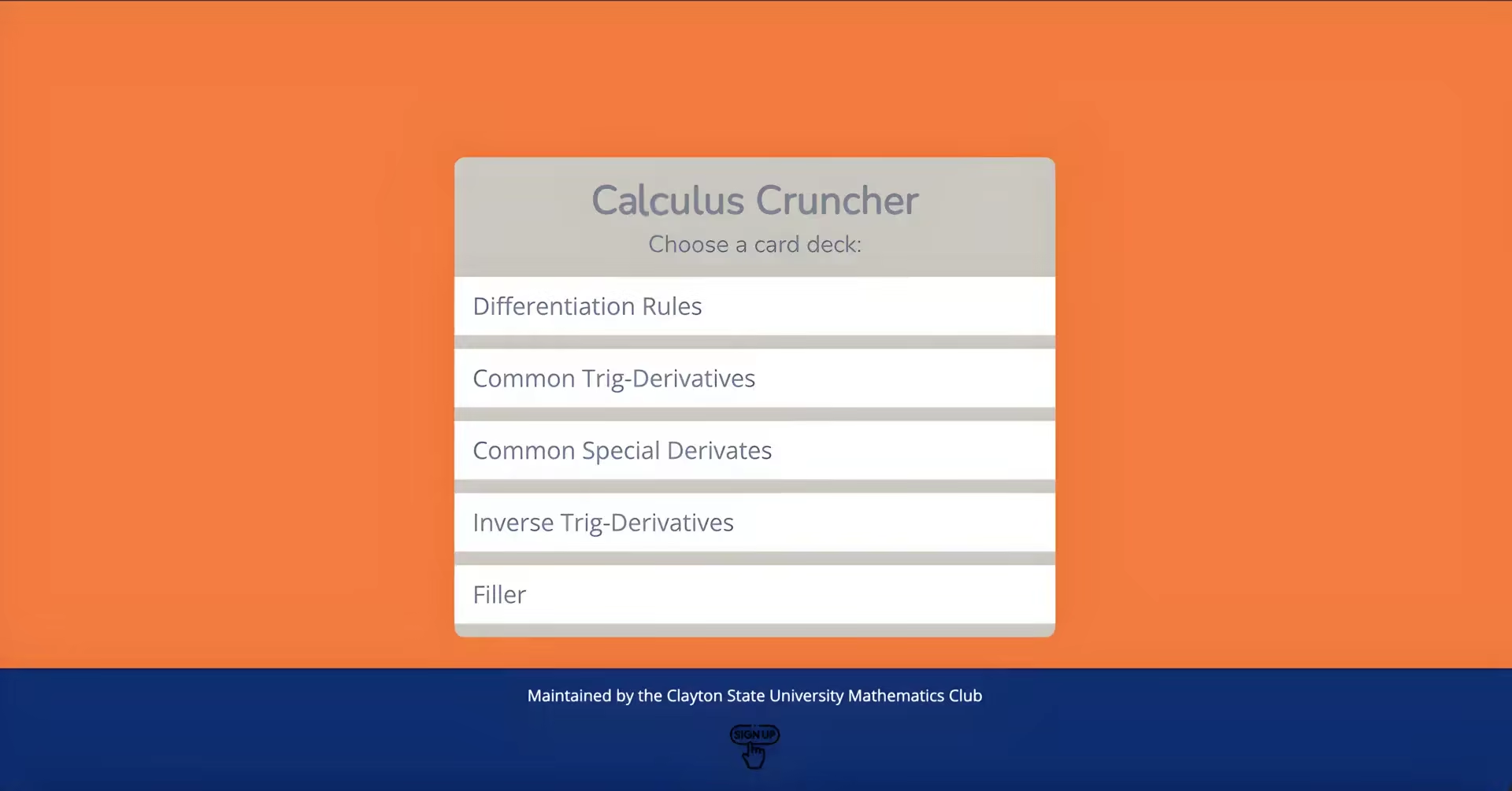
An free webapp built on Javascript designed for students studying mathematics.
Argon2
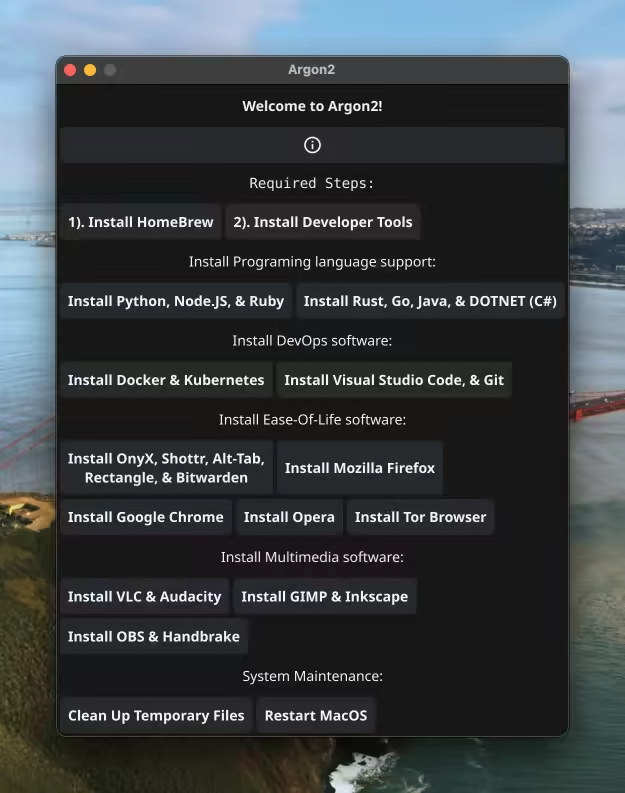
Argon2 is a GO rewrite of the original Argon. This version features much faster run times and better error/UI handling. The goal of the Argon2 project is to become the MacOS equivalent of the popular Windows tool, Ninite. Argon2 also features a junk/temporary file cleaner - and is much easier to get up and running compared to the first Argon, thanks to the Go language's Fyne framework.
Argon
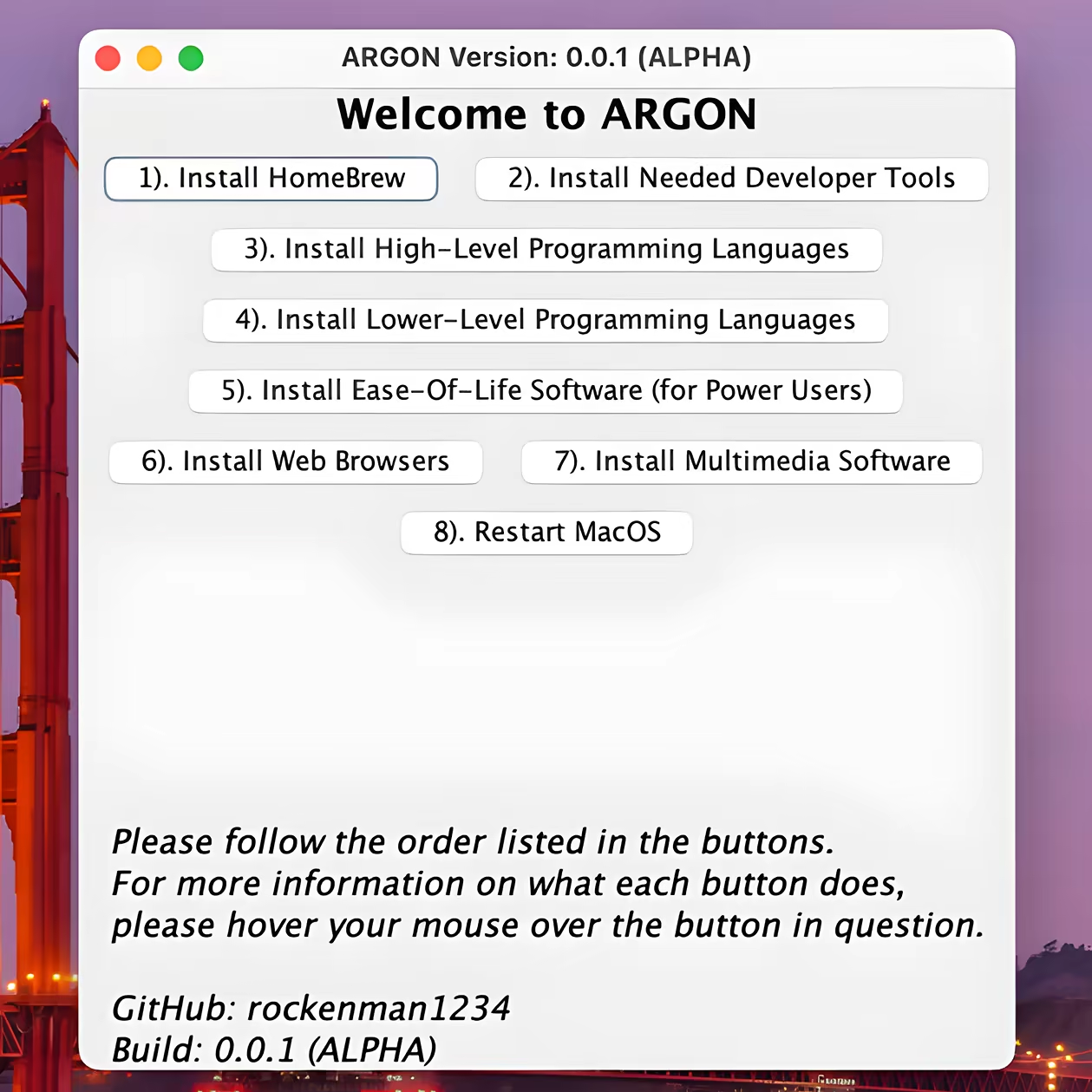
Argon is a Java-based downloadable software tool enabling software developers and power users to quickly and reliably utilize their Macs while leaving no trace.

Newton's Method
A simple math research project program written in Python, under the supervision of Dr. Christopher Raridan, built to demonstrate Newton's Method of finding roots.

Java Math Iterator
A simple math research program written in Java, under the supervision of Dr. Christopher Raridan, to demonstrate the process of iterations in computer science.
Falling Into Viscosity

Presented at Clayton State University's Student Success Conference in Spring 2023, this project aimed to determine the viscosity of an unknown fluid by analyzing a video of a falling metal ball. The motion was tracked using Tracker software, and Stokes law was applied to relate the ball's velocity to the fluid's viscosity. The results demonstrated the effectiveness of combining Tracker software with Stokes law for measuring fluid viscosity, providing a low-cost and accessible method with potential applications in research and industry.
Developing Metacognitive Skills
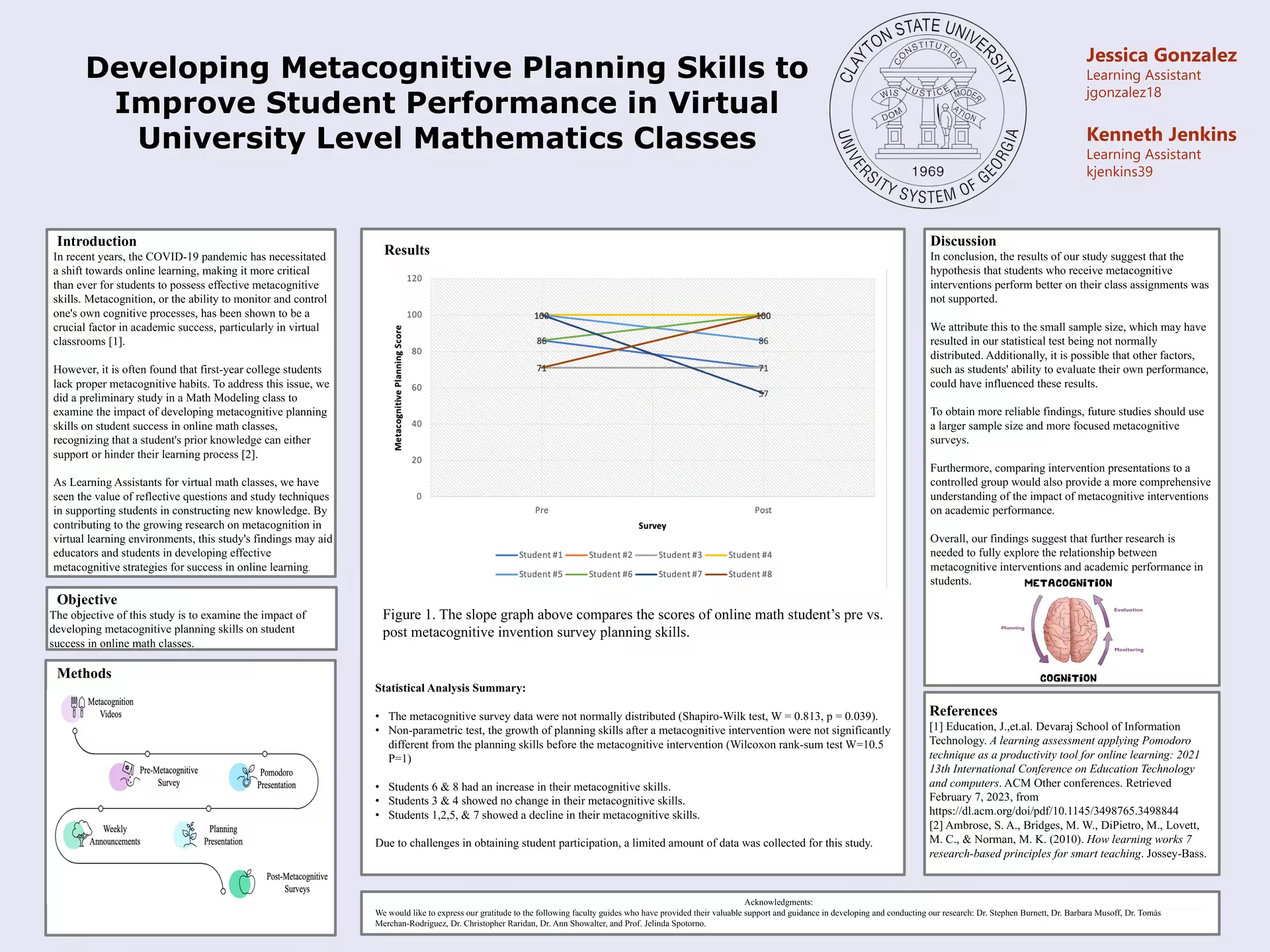
Presented at Clayton State University's Student Success Conference in Spring 2023, this project aimed to examine the impact of developing metacognitive planning skills on student success in online math classes. The objective was to contribute to the research on metacognition in virtual learning environments and provide insights for educators and students in developing effective metacognitive strategies for online learning.
I'm Alex Jenkins, a Computer Engineering student at Georgia Tech and a passionate advocate for software freedom, digital autonomy, and community-driven technology.
I'm the President and Founder of LibreTech Collective ‐ Georgia Tech's first and only student organization dedicated to free, libre, and open-source software, hardware, and culture. Founded in 2025, LTC is built on a simple but powerful belief: technology should empower, not restrict, its users. Guided by the Four Essential Freedoms, we promote tools and practices that give people the right to run, study, modify, and share technology ‐ free as in freedom, not merely free of charge. I believe that as computer engineers, we have a unique responsibility to build systems that serve the public good rather than concentrate power in the hands of a few, and LTC is my attempt to cultivate that ethic right here on campus. Most recently, LTC joined the Apereo Foundation as a Community Member, connecting Georgia Tech students with real-world, GPL-compatible open-source projects used by institutions worldwide.
I'm also a contributing member of the GNU Audio-Video Team, where I work on the development and maintenance of free software tools for audio and video processing. I also help with media encoding, archiving, and outreach efforts to promote the Free Software Foundation & GNU Project.
Previously, I worked as a Research & Teaching Assistant in the Fedele-AI Lab at Georgia Tech, where I coauthored a libre AI/ML textbook and contributed to research at the intersection of AI, engineering, and creative applications. Co-taught by civil engineering professor Francesco Fedele and artist-professor Mark Liebert, the course explored how AI, neuroscience, design, and art converge to create generative visual and auditory media. Producing that work under a libre license wasn't incidental ‐ it reflected my conviction that knowledge, like software, flourishes when it's freely shared and built upon.
I've been featured in places like the Technique (Georgia Tech's student newspaper), GNU Project, Georgia Tech College of Engineering Press Release, Techrights, Tuxmachines, FossForce, Apereo Foundation Blog, and the Atlanta Journal-Constitution.
Whether I'm architecting decentralized peer-to-peer systems, contributing to free software projects, or organizing workshops on computing freedom, my work is animated by one core idea: the people who use technology should control it, not the other way around.
Are you looking for a reliable and efficient solution to represent your product or business in the field of software and/or hardware design? Or perhaps you have some advice to share and just want to say "Hi"? In any case, feel free to reach out to me. I will do my best to respond promptly! I am always open to new opportunities and collaborations, so don't hesitate to get in touch.
(The quickest way to get in touch with me is to drop me a line below)